
Common Sense in 1776
 The American colonies were at war, but no one knew how it would end. British soldiers and American militiamen had already fought at Lexington and Concord. The Continental Army surrounded Boston, and the bloody fighting at Bunker Hill had shown that American farmers and tradesmen were willing to stand and fight.
The colonists were angry with King George III and Parliament, but some still hoped their differences with Great Britain could be settled. They wanted their rights restored, but they were not ready to break completely away from the most powerful empire in the world.
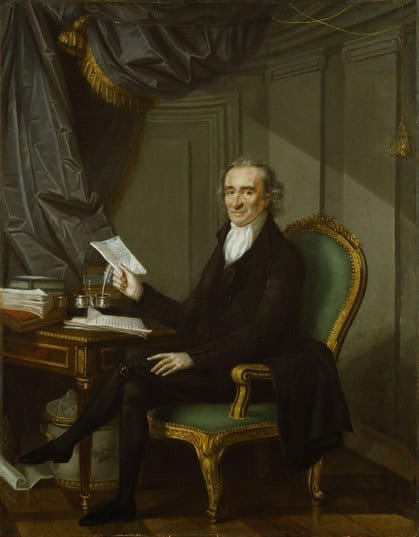
In the middle of this uncertainty, a small pamphlet appeared in Philadelphia. It was called “Common Sense.” Its author was a man whose life had taken him from the streets of England to the center of the American Revolution. His name was Thomas Paine.
Paine was born in Thetford, England, in 1737. His father was a corset maker, and Paine learned the trade himself. His early life was filled with struggles and setbacks. His first wife passed away during childbirth. He worked as a sailor and later served as an excise officer, collecting taxes for the British government. He finally became a writer; he knew how to put complicated political ideas into simple, powerful words.
In 1774, Paine met Benjamin Franklin in London. Franklin encouraged him to travel to America, and Paine arrived in Philadelphia late that year. America was already politically tense. Paine quickly became interested in the growing conflict between the colonies and Great Britain. He began writing for Pennsylvania Magazine, where he built a reputation for expressing strong opinions in plain language.
Then came “Common Sense.” Published in January 1776, the pamphlet made an argument that was still considered radical by many Americans. America should not simply ask Britain to treat the colonies better. America should become an independent nation.
Paine attacked the idea of hereditary monarchy, kings and queens. Why should one family have the right to rule an entire people simply because of who their parents were? He argued that government should exist for the benefit of the people.
He also questioned why Americans should remain tied to a country an ocean away. Britain controlled American trade and involved the colonies in European wars. Paine believed the colonies had the resources and the ability to govern themselves. It was their right to stand alone.
His words and ideas spread quickly. Copies of “Common Sense” were sold throughout the colonies. People read it in homes, taverns, meetinghouses, and military camps. Those who could not read it themselves often heard it read aloud.
For many Americans, Paine was saying what they had been afraid to say. Why should we remain subjects of a king? The timing was important. The Continental Congress was struggling with the question of what should come next. Should the colonies continue seeking reconciliation with Britain, or should they take the enormous step toward independence?
George Washington understood the importance of Paine’s writing. During the difficult winter of 1776, “Common Sense” was read to the Continental Army. The soldiers were enduring cold, hunger, sickness, and the dangers of war. His words helped remind them of what they were fighting for. His pamphlet helped change public opinion and made independence easier for ordinary Americans to imagine.
Six months later, the Continental Congress adopted the Declaration of Independence. Thomas Jefferson gave the new nation its Declaration. Thomas Paine helped give its people the courage to believe that such a nation was possible. He helped change history with a pen, a pamphlet, and an extraordinary idea. Sometimes it begins when someone finds the courage to put an idea into words. In January 1776, Thomas Paine did exactly that, and he called it “Common Sense.”
Thank you for reading “Our History Matters. I always enjoy hearing from readers; contact me at tj.cox2023@outlook.com with your questions, comments, ideas, or suggestions.