
Daughters of Liberty
 The Daughters of Liberty emerged in 1766 during the crisis surrounding the Stamp Act. The Stamp Act, passed by Parliament in 1765, imposed a tax on many printed materials used throughout the colonies, including newspapers, pamphlets, legal documents, licenses, and other papers. It also affected everyday life in ways that touched many women, including taxes associated with taverns and other businesses.
 Women could not vote or serve in colonial legislatures. They were also generally excluded from the committees that organized the growing resistance to British policies. Yet that did not mean women were silent. Instead, they found other ways to use their influence.
The Daughters of Liberty supported the better-known Sons of Liberty, a group of politically active men who opposed British taxation and interference in colonial affairs. Samuel Adams, one of the leading patriots of Massachusetts, understood the importance of women to the patriot movement. He reportedly emphasized that with women supporting the cause, British loyalists would have reason to fear the growing resistance.
The Daughters of Liberty were not necessarily a single, formally organized organization with chapters, officers, and membership rolls, as a modern organization would be. The name appears to have been used more broadly for patriotic women and groups of women who participated in resistance activities throughout the colonies.
One of the most powerful weapons available to colonial women was their purchasing power. British laws and taxes affected the goods Americans purchased every day. The Townshend Acts of 1767, for example, placed duties on imported goods such as glass, lead, paint, paper, and tea. Women were often responsible for purchasing household goods, making their decisions about what to buy an important part of the colonial resistance.
The Daughters of Liberty encouraged families to stop purchasing British imports and instead support American-made products. They participated in nonimportation movements and encouraged the signing of agreements promising to avoid British goods. Their message was simple: If Americans refused to buy British products, British merchants would suffer financially, and Parliament might be forced to reconsider its policies.
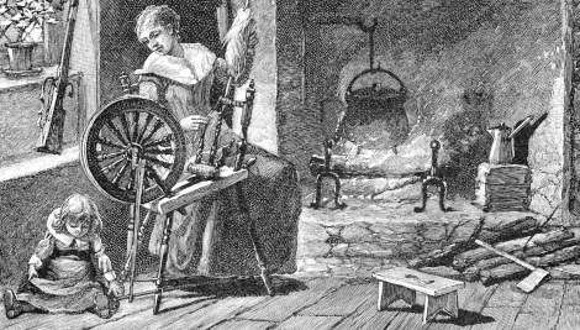
Perhaps the most famous example of the Daughters of Liberty’s activities was the spinning bee. Spinning was normally considered part of a woman’s household responsibilities. Women spun wool, flax, and other fibers into thread that could eventually become clothing and other necessities.
They transformed this ordinary household activity into an expression of patriotism. Women gathered together to spin cloth and demonstrate that Americans could produce their own clothing rather than depend upon imported British textiles.
The boycott of British goods also affected clothing. Patriotic women began wearing homespun clothing instead of imported British fabrics and accessories. Ribbons, lace, and other fashionable British goods were avoided by women who wanted their appearance to demonstrate their political beliefs.
The Daughters of Liberty demonstrated something important: political influence did not always require the right to vote. Women could influence what their families purchased. They could encourage their husbands, fathers, brothers, and sons to support the patriot cause. They could organize gatherings, sign petitions, boycott British goods, produce homespun cloth, and use their social influence to spread the message of resistance.
The Daughters of Liberty helped establish a foundation for the many ways women would contribute during the Revolutionary War. Women would serve as nurses, camp followers, messengers, suppliers, writers, fundraisers, and supporters of the Continental cause. Some would even take much greater risks.
The women who called themselves Daughters of Liberty helped demonstrate that patriotism could be expressed not only on the battlefield or in a legislative chamber, but also in the home, the marketplace, and the community.
Thank you for reading “Our History Matters. I always enjoy hearing from readers; contact me at: tj.cox2023@outlook.com with your questions, comments, ideas, or suggestions.
I have compiled all of my “Our History Matters” articles published from March 6 through July 31 into a magazine-style booklet. The booklet is 64 pages in an 8½ × 11-inch format and contains every article in one convenient volume. Copies are available for $10.00, so contact me to purchase one.
August 13, 2026 @ 11:09 am
Thank you for helping to keep our history alive.