
Maryland’s Largest Battle of the Revolution

As Americans celebrated the adoption of the Declaration of Independence in early July 1776, the war for that independence was already spreading across the colonies. While many people think of the Revolution’s largest battles taking place in New York, New Jersey, or Massachusetts, Maryland experienced its own major clash only days after independence was declared. On July 16, 1776, the Battle of Cooch’s Bridge was still more than a year away. Still, Maryland’s largest Revolutionary War battle occurred at the entrance to Baltimore Harbor in what became known as the Battle of the Lower Chesapeake, often called the Battle of the Barges.
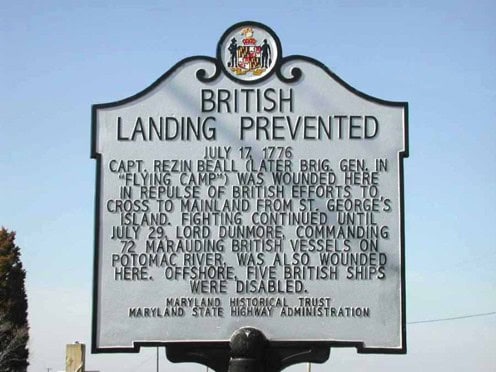 The action was fought near the mouth of the Patapsco River, between the Maryland Navy and British warships, as the British attempted to tighten their control over the Chesapeake Bay. Although small by the standards of later Revolutionary battles, it was the largest naval engagement ever fought in Maryland during the war.
By the summer of 1776, British naval vessels had become a constant threat along the Chesapeake. They raided plantations, seized merchant ships, confiscated livestock, and interrupted the trade that many Maryland families depended upon. The colony could not match the Royal Navy’s powerful warships, but Maryland had begun building its own small fleet to defend its rivers and coastline.
The Maryland vessels were not large frigates or ships of the line. Instead, they consisted primarily of swift galleys and barges armed with cannon. Their shallow draft allowed them to operate in waters where larger British ships could not easily follow. These small vessels allowed Maryland’s sailors to challenge a far stronger enemy on more favorable terms.
On July 16, Maryland’s flotilla confronted British forces near Baltimore’s approaches. Throughout the day, cannon fire echoed across the bay as the opposing sides exchanged broadsides. Maryland’s sailors fought with determination despite facing experienced crews from the world’s most powerful navy.
The fighting demonstrated that the struggle for independence extended far beyond famous battlefields. Control of rivers and bays was just as important as control of roads. Whoever dominated the Chesapeake could transport troops, protect commerce, or strike vulnerable coastal communities with little warning.
Although neither side achieved a decisive victory, the engagement proved that Maryland’s defenders were willing to resist British naval power. Their determined stand complicated British operations in the Chesapeake and encouraged continued efforts to strengthen Maryland’s naval defenses.
The battle also highlighted the important role played by state navies during the Revolution. Before the Continental Navy became fully organized, individual states often bore the responsibility of protecting their own coastlines. Maryland’s navy became one of the most active state naval forces, capturing enemy vessels, escorting merchant ships, and defending local waters throughout much of the war.
Today, the Battle of the Lower Chesapeake receives little attention compared to Lexington, Bunker Hill, Trenton, or Yorktown. Yet for the people of Maryland in 1776, it was a powerful reminder that independence would not be won by declarations alone. It would require ordinary citizens willing to risk their lives on land and sea.
History often remembers the great victories, but it is equally important to remember the lesser-known battles where Americans first demonstrated their determination to defend their homes. Maryland’s largest Revolutionary War battle reminds us that the fight for liberty reached every colony, every river, and every harbor. Long before the war was won, Maryland’s sailors had already shown that courage and resolve could stand against even the greatest naval power on earth.
Nearly 250 years later, their service deserves to be remembered as an important chapter in America’s struggle for independence. Every colony had its story, and Maryland’s was written not only on its fields but also upon the waters of the Chesapeake Bay. Our history matters.
July 29, 2026 @ 7:14 am
Once again your article has given me a part of our fight for independence I had never read or heard about. Each week I receive a lesson in history and each week look forward to another chapter in our Thanks!
July 29, 2026 @ 8:04 am
I would contend that the Americans won that battle simply by successfully contesting the mighty British navy. We won by not losing.
Jessee Ring