New River Conservancy Sponsors Tree Plantings in NRV
By DANIELLE REID
Patriot Publishing
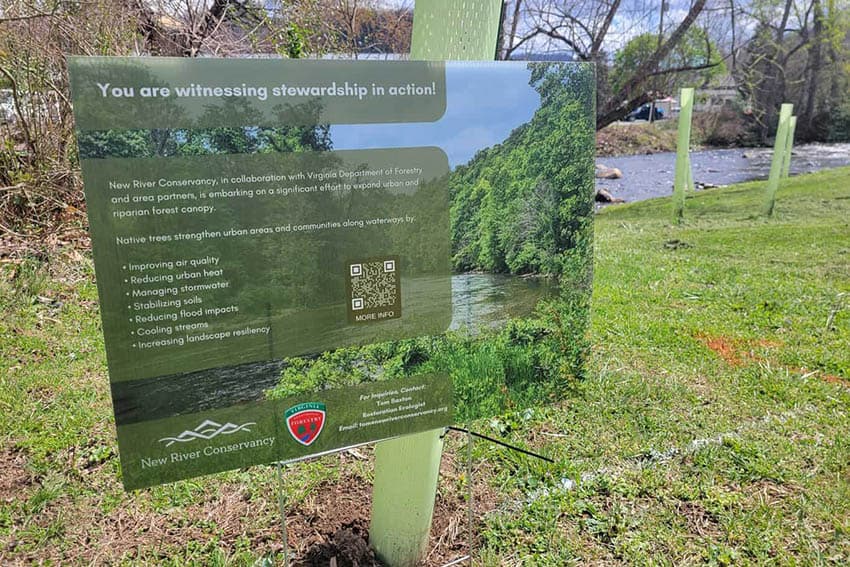
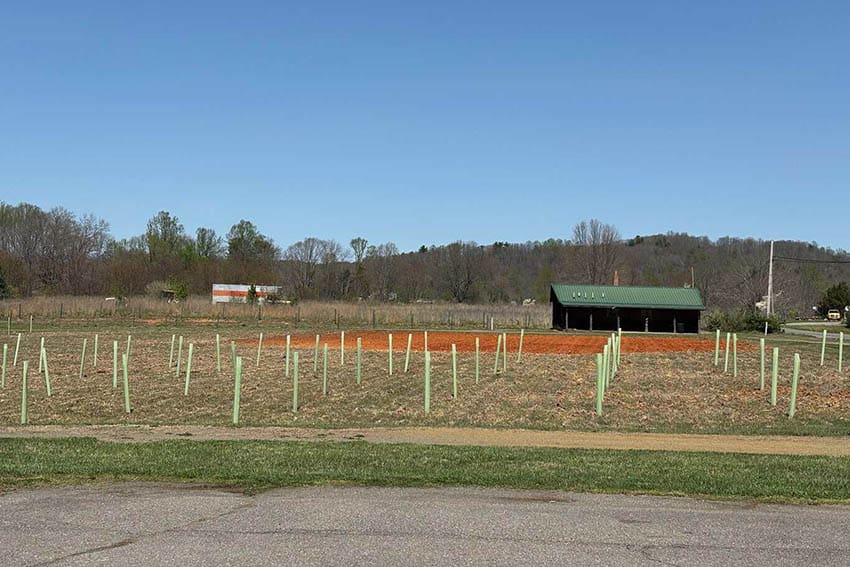
There has been quite a lot of interest lately – and some speculation – about the green tubes seen scattered around Pulaski County. They are not some weird science project, but instead a combined effort by the New River Conservancy, the Virginia Department of Forestry and the Town of Pulaski and Pulaski County to improve recreation, encourage native habitation and wildlife.
The New River Conservancy is a non-profit organization based in West Jefferson, N.C. and dedicated to protecting the New River watershed. The organization has spent over 50 years protecting the waters, woodlands and wildlife of the New River Watershed. Among their activities are planting trees, hosting river clean-ups throughout the watershed, monitoring the water quality using the Water Watcher program, educating the public and restoring the stream banks.
“The new trees are an investment toward our future,” explained Lisa Stansell-Galitz, Marketing and Communications Director for the New River Conservancy. “We’re planting from a variety of 60 native species of trees and shrubs in the region in our parks, along stream banks and recreation areas. They are planted on public lands with grant money,” she added.
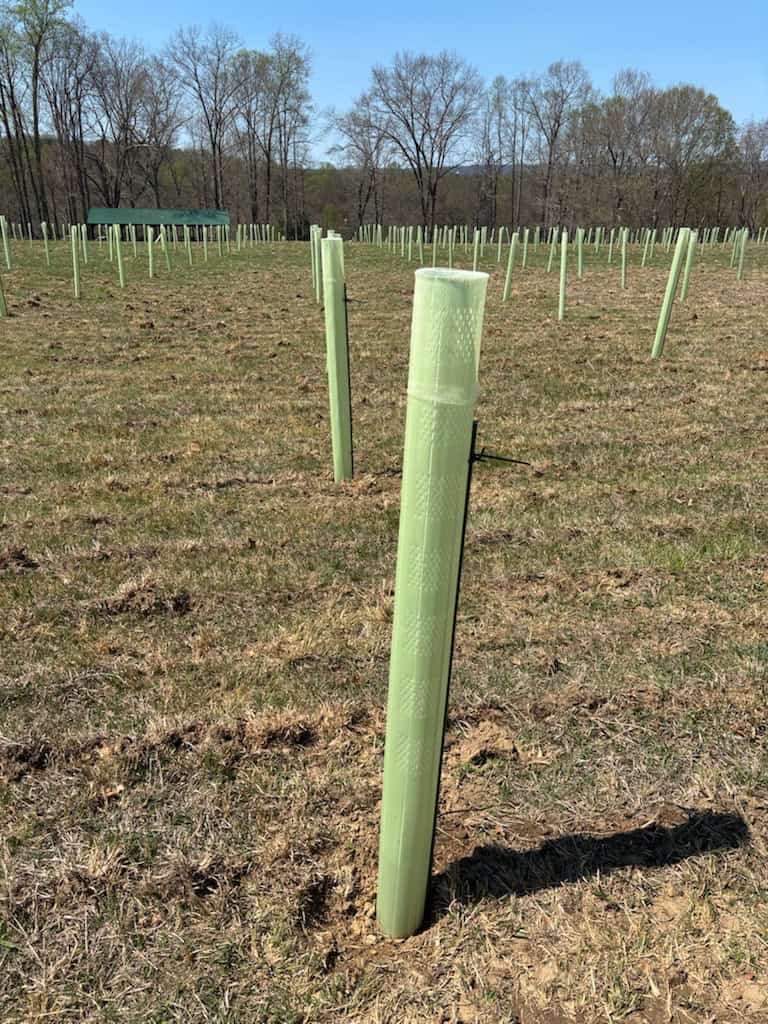 The slender green tubes that people have noticed are to protect the saplings from deer nibbling on their tender leaves. The tubes are temporary and will be removed later. Unfortunately, even with the protective tubes and attention from volunteers, the survival of these tree is not guaranteed; and about 40 percent of them will not survive because of nature and weather conditions.
The trees are provided by a grant from the Virginia Department of Forestry and are being planted in a variety of places around the NRV, including Hiwassee’s O’Dell Park and Draper Community Park.
“We are working throughout Southwestern Virginia to help restore these buffers. Blacksburg, Radford, Damascus, Narrows, Draper, Hiwassee and the town of Pulaski will benefit from this restoration work. Most recently we planted trees and shrubs at the Calfee Center to help restore Tract Fork,” stated Stansell-Galitz.
There have also been plantings at the intersection of Dora Highway and East Main Street (Route 99) and along Lee Highway in Pulaski.
The plantings will provide a riparian buffer, which is a vegetated area, comprising trees, shrubs and grasses situated immediately adjacent to water bodies like streams, lakes or wetlands. These riparian buffers act as a natural protected transition zone that filters pollutants, stabilizes banks, reduces flooding and provides critical wildlife habitats. They are seen as vital for maintaining water quality and protecting aquatic ecosystems.
Trees are known to help improve outdoor air quality, stabilize stream banks, help with stormwater mangement and improve the health of the streams. Some of the trees being planted are deciduous while others are coniferous trees. Types of deciduous trees are oak, maple, birch, elm and apple. Coniferous trees include fir, spruce, pine, redwood and cedar.
There is something special about sitting under the shade of a tree during a warm summer day and putting the problems of the world on hold – even if just for a little while. And, while you are enjoying that rest, thank the New River Conservancy for their continuing efforts.