
The Power of Jefferson’s Words
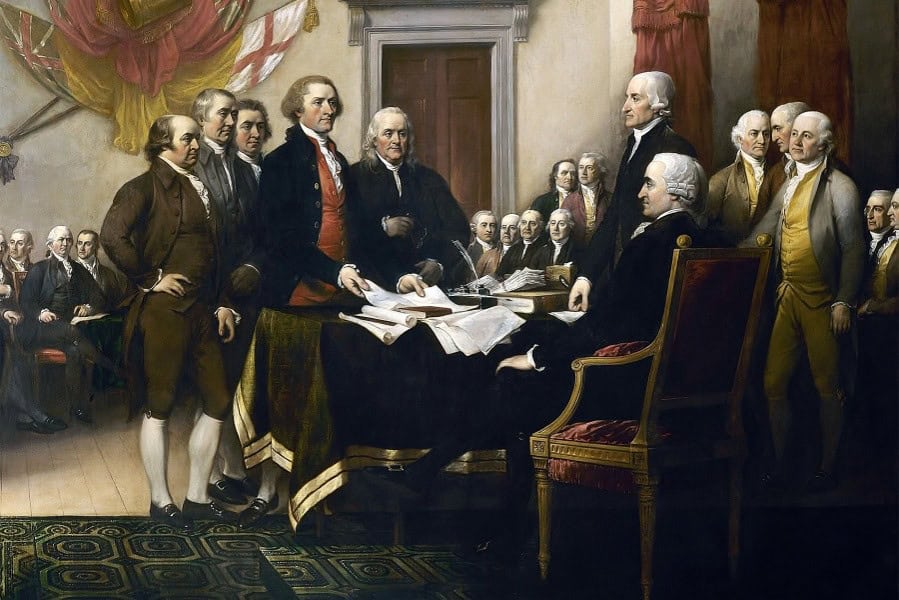
One reason the Declaration of Independence has remained one of history’s greatest political documents is its remarkable wording. Thomas Jefferson did not simply write a list of complaints against King George III. He carefully chose words that expressed universal principles of liberty and human rights—principles that could inspire people far beyond the thirteen colonies.
The Declaration begins with a formal introduction stating that when one people separates from another, they should explain the reasons for doing so. This opening sets a respectful and logical tone rather than an emotional one.
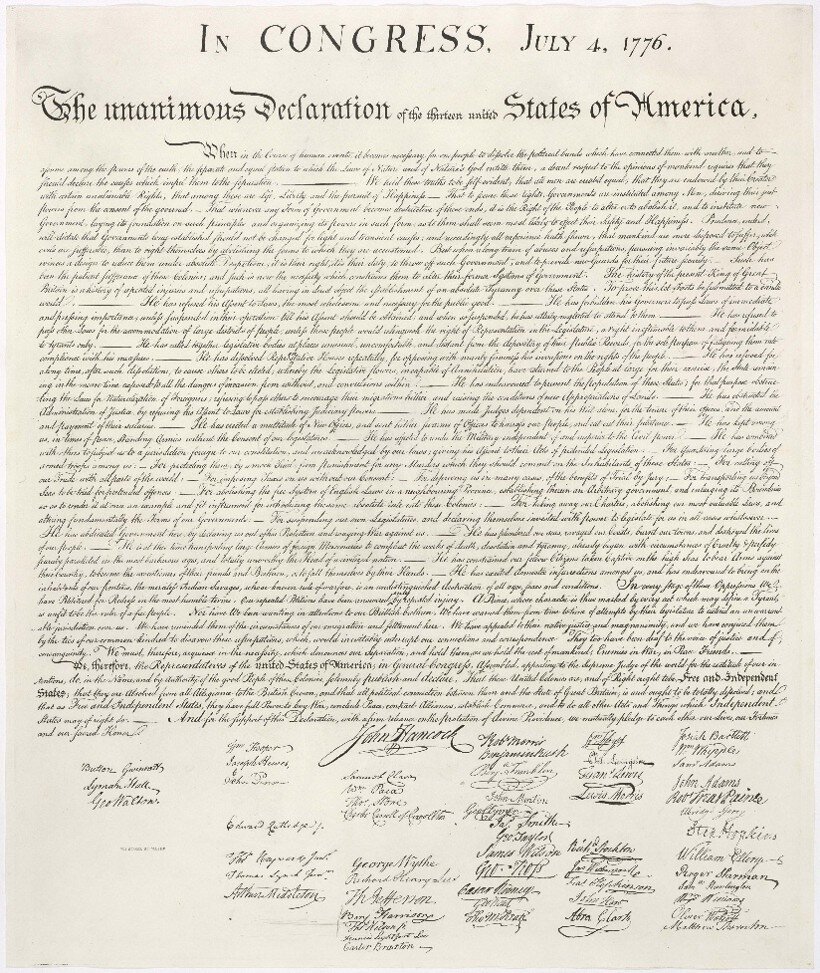 The best-known words appear in the preamble:
“We hold these truths to be self-evident, that all men are created equal, that they are endowed by their Creator with certain unalienable Rights, that among these are Life, Liberty, and the pursuit of Happiness.”
Jefferson originally wrote that these truths were “sacred and undeniable.” During debate, Benjamin Franklin and other delegates suggested changing the phrase to “self-evident.” That subtle change made the statement even stronger. Instead of appealing to faith alone, it declared that these rights were obvious truths that any reasonable person could recognize.
 Jefferson also borrowed from the ideas of English philosopher John Locke, who had written that people possess the natural rights of “life, liberty, and property.” Jefferson replaced “property” with the more inspiring phrase “the pursuit of Happiness.” Historians have long debated exactly why he made this change, but it broadened the meaning beyond material possessions to include the freedom to improve one’s life, pursue one’s dreams, and live according to one’s conscience.
Another carefully chosen phrase declares that governments derive “their just powers from the consent of the governed.” In those eight words, Jefferson rejected the centuries-old belief that kings ruled by divine right. Instead, he declared that governments are legitimate only when they have the approval of the people they govern.
The Declaration then uses the repeated phrase, “He has…” to introduce each grievance against King George III. This repetition emphasizes that the colonists’ decision was not based on a single disagreement but on a long pattern of abuses. By listing twenty-seven specific complaints, the Congress demonstrated that independence was a measured response rather than a rash act.
The document concludes with one of history’s most memorable pledges:
“And for the support of this Declaration, with a firm reliance on the protection of divine Providence, we mutually pledge to each other our Lives, our Fortunes and our sacred Honor.”
These final words were more than poetic language. By signing the Declaration, the delegates were committing everything they owned—and risking execution for treason if the Revolution failed. Their closing pledge reflected the extraordinary courage required to declare independence from the most powerful nation on earth.
Today, nearly 250 years after its adoption, the Declaration of Independence remains one of the most influential documents ever written. Its message continues to remind Americans that freedom is not granted by governments but comes from God, and that governments exist only with the consent of the people.
Every Fourth of July, as fireworks light the night sky and flags wave across the nation, Americans celebrate more than a birthday. They celebrate the courage of fifty-six men who pledged “our Lives, our Fortunes and our sacred Honor” to a cause that seemed impossible. Their decision gave birth to a nation dedicated to liberty and self-government.
As we celebrate Independence Day, the Declaration reminds us that freedom is never guaranteed. Each generation inherits the responsibility to preserve the liberties won by those who came before us. Understanding the Declaration of Independence helps us appreciate not only our nation’s past but also the enduring principles that continue to shape America’s future.
Our History Matters because the Declaration of Independence is more than a historic document—it is America’s enduring statement that liberty, justice, and self-government are worth defending.
Thanks for reading “Our History Matters” by T. J. Cox.
I love to hear from readers; please get in touch with me at: tj.cox2023@outlook.com
July 2, 2026 @ 9:14 am
We need to be reminded that a great price was paid for our freedom and that dedication to our freedom and our future is something we should strive to honor today!! One nation under God, true then and true today!! Great article!