
Washington’s First Victory
 The summer of 1776 had not gone well for General George Washington and the Continental Army.
America declared its independence in July, but the British were determined to end the rebellion. After the devastating American defeat at the Battle of Long Island on August 27, Washington successfully moved his army across the East River and escaped to Manhattan. The British prepared to follow the Americans across the river and continue the war.
September 15th, the British landed troops at Kip’s Bay and pushed American soldiers north. New York City was in British hands, the morale was low in Washington’s army. He knew his army was facing a powerful and experienced British force that wanted to destroy his army.
Washington positioned his army on high ground around Harlem Heights in northern Manhattan. The location offered an important defensive position, with the high ground making it more difficult for the British to attack. Then, on the morning of September 16, Washington received word that British troops were nearby.
Colonel Thomas Knowlton and his Rangers were sent forward to investigate. Knowlton was an experienced officer from Connecticut who had served during the French and Indian War. His Rangers were used for scouting and other dangerous missions to find out what the British were doing.
Around 6 o’clock that morning, Knowlton’s men encountered British light infantry, and what began as a small engagement soon became a much larger fight.
Washington heard the fighting. He sent Colonel Joseph Reed forward to determine what was happening. As the reports came back, Washington realized that his soldiers had an opportunity to attack the British.
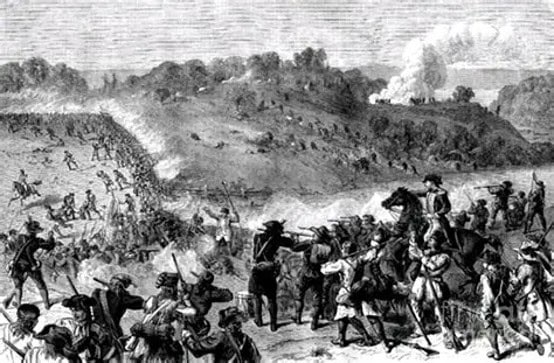
The fighting moved toward the area around Harlem Heights and continued for several hours. Washington sent additional American troops forward, including Knowlton’s Rangers and other Continental soldiers. The Americans pushed against the British forces back and forced them to withdraw toward their own lines. The first victory for the Continental Army.
The victory came at a terrible price. Colonel Thomas Knowlton was killed during the fighting. His death was a serious loss to Washington and to the men who served under him. Knowlton had proven himself a brave and capable officer, and his Rangers had played an important role in the battle.
Among the Americans fighting that day was a young artillery officer named Alexander Hamilton, who would later become one of the most important figures in the founding of the United States.
Washington eventually ordered his men to withdraw rather than risk becoming too heavily engaged with the larger British army. The Battle of Harlem Heights was not a massive battlefield victory, but it was something Washington’s army desperately needed; it was a moral win.
After the defeats on Long Island and Manhattan, the American soldiers had been discouraged. At Harlem Heights, they had stood their ground and forced experienced British troops to retreat. The battle helped restore confidence among Washington’s soldiers.
Sometimes history is not changed by one great victory. Sometimes a small victory gives people the courage to keep going. Washington’s army still faced enormous challenges. The British continued to control New York, and the campaign of 1776 was far from over. Washington would soon move his army north toward White Plains.
But on September 16, 1776, something important happened on the heights of northern Manhattan. For the first time in the New York campaign, Washington’s soldiers had shown themselves—and the British—that the Continental Army could stand and fight.
The road to American independence would be long and difficult. There would be more defeats, more retreats, and many more sacrifices. But the men who fought at Harlem Heights had given Washington’s army something that cannot be measured on a battlefield map. They had given it hope. And that is why Our History Matters.
Thank you for reading “Our History Matters. I always enjoy hearing from readers; contact me at tj.cox2023@outlook.com with your questions, comments, ideas, or suggestions.
September 24, 2026 @ 8:34 am
Enjoyed this one!