
“A Forest of Masts:” The British Army and Navy arrive in New York
 On July 2, 1776, while delegates in Philadelphia were voting to declare the American colonies free and independent from Great Britain, another event of enormous importance was unfolding nearly one hundred miles away. In New York Harbor, the first ships of a massive British invasion fleet began to arrive. While the Continental Congress was declaring independence with pen and parchment, the British were preparing to reclaim the colonies with muskets and cannon.
General Sir William Howe had chosen New York as the next target of British operations. After evacuating Boston in March 1776, the British needed a port that could support a large army and the powerful Royal Navy. New York was the perfect choice. Its deep harbor, central location, and access to the Hudson River made it the key to controlling the colonies. If the British could seize New York and dominate the Hudson River, they hoped to separate New England—the center of the rebellion—from the southern colonies.
The first British ships reached Staten Island in early July. Within days, transports carrying thousands of soldiers anchored in the harbor. By the end of the month, nearly 32,000 British and German troops would be assembled there, creating the largest expeditionary force Great Britain had ever sent across the Atlantic. The army included experienced British regulars, loyalist volunteers, artillery units, and thousands of German auxiliaries, commonly called Hessians.
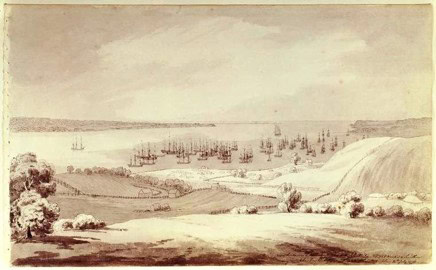 General George Washington understood the importance of New York. After driving the British from Boston, he had moved the Continental Army south to defend the city. Washington believed, correctly, that New York would become the next battlefield. Throughout the spring and early summer of 1776, his soldiers dug earthworks, constructed forts, and placed cannon around Manhattan, Brooklyn, Governors Island, and other strategic locations.
Washington faced a difficult challenge. His army consisted largely of inexperienced volunteers whose enlistments were short, supplies were scarce, and discipline was uneven. Many soldiers had never fought a major battle. Across the harbor stood the finest professional army in the world, backed by the most powerful navy on earth.
The contrast between the two forces could hardly have been greater. The British soldiers were well-trained, well-equipped, and supported by experienced officers. Washington’s army was determined but lacked uniforms, ammunition, tents, and even sufficient food. Nevertheless, the Continental soldiers believed they were fighting for something more valuable than military power—the right to govern themselves.
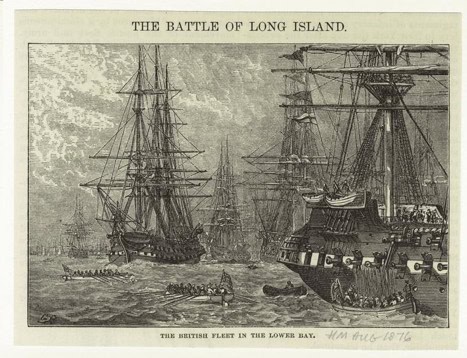 As more British ships crowded into New York Harbor, the sight was overwhelming. Hundreds of sails filled the horizon. Witnesses described “forests of masts” stretching across the harbor. The arrival of so many warships and troop transports left little doubt that the British intended to crush the rebellion with overwhelming force.
For the people of New York, the growing fleet brought uncertainty and fear. Some residents remained loyal to the Crown, while many others supported independence. Families found themselves divided by politics, and many wondered whether the city would soon become a battlefield.
The Declaration of Independence gave new purpose to Washington’s army. The soldiers were no longer simply resisting British policies—they were defending a new nation. Copies of the Declaration would soon be read aloud to the troops, strengthening their resolve for the difficult campaign ahead.
History often remembers July 1776 for the signing of the Declaration of Independence, and rightly so. Yet at the very same moment Americans were declaring liberty, the greatest military challenge of the Revolution was gathering in New York Harbor. The words written in Philadelphia would soon be tested by the guns of the British Army.
Our History Matters because freedom is secured not only by inspiring words, but also by the courage to defend them when they are challenged
Thanks for reading “Our History Matters” by T. J. Cox.
I love to hear from readers; please get in touch with me at: tj.cox2023@outlook.com