
Virginia Tech President highlights progress, priorities, and athletics push in State of the University Address
From Virginia Tech
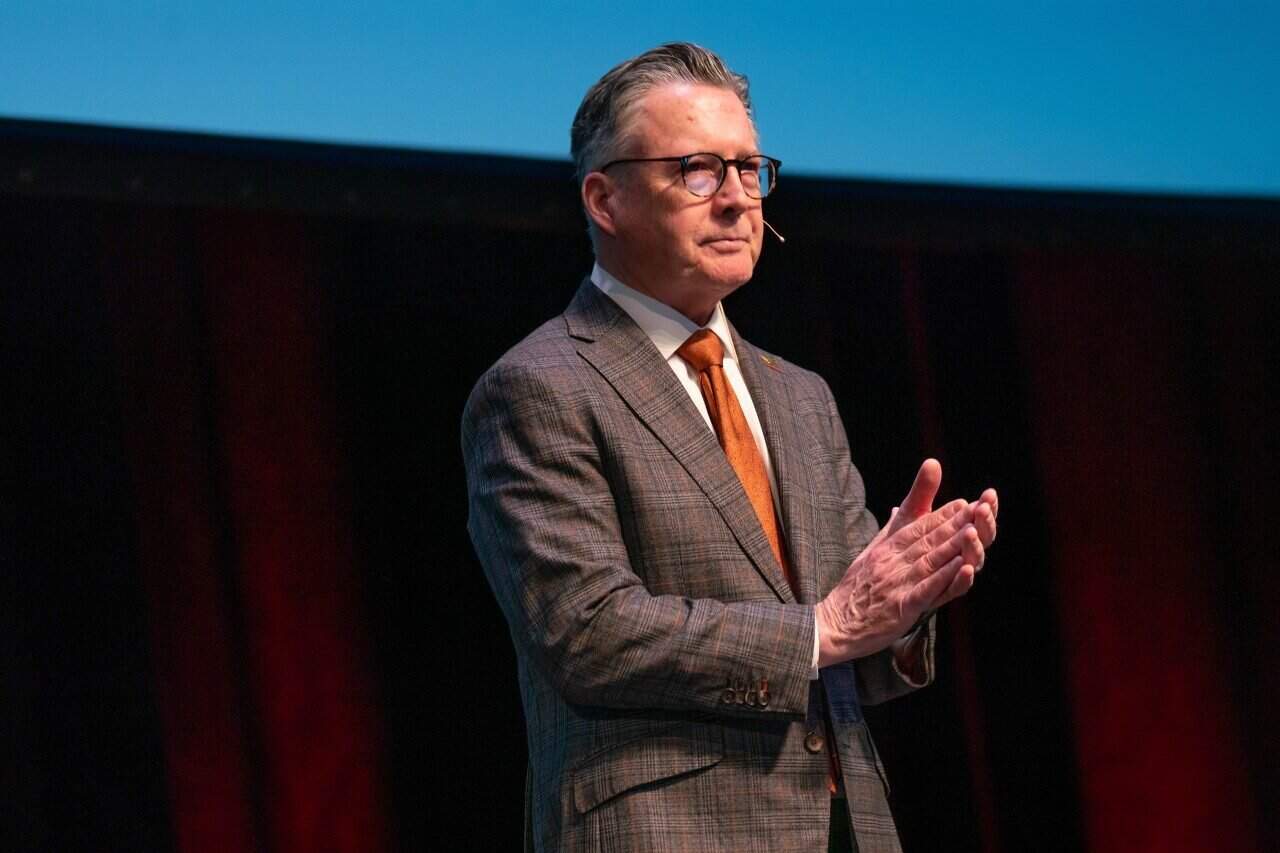
Continued emphasis on previously established priorities, a significant focus on athletics going forward, and the formulating of plans to meet possible challenges ahead all were themes for Virginia Tech President Tim Sands at his annual State of the University Address held Wednesday afternoon at the Virginia Tech Center for the Arts.
With impact being a central theme to his message, Sands started the address by highlighting select Virginia Tech accomplishments over the past year that brought national attention to the university, including the hosting of the Times Higher Education Innovation & Impact Summit at Academic Building One in Alexandria – the first time the event had been hosted in North America.
He also pointed out that Virginia Tech had reached or exceeded its goals for research funding, philanthropy, and alumni engagement in 2025. In addition, the university achieved growth in average faculty, staff, and graduate student compensation and improved accessibility for underrepresented and underserved, all while remaining fiscally responsible.
“Today, the state of our university is engaged, energized, optimistic, and prepared to move ahead in 2026,” Sands said. “Our focus is on serving our students and our communities, delivering meaningful and measurable impact and value, and engaging new partners and building public trust in the value of our approach to higher education.
“This year, we will re-evaluate, re-set, and most importantly, raise the bar. Our long-term vision continues to emphasize impact, attracting talent, ensuring institutional excellence, and elevating the ‘Ut Prosim difference’ that sets Virginia Tech apart.”
He noted that Virginia Tech is currently updating its strategic plan, and he encouraged the university community to complete a survey being conducted by the Office of Strategic Affairs.
Sands said the university would continue to focus on its two top priorities – Virginia Tech Global Distinction and Virginia Tech Advantage – while also elevating Virginia Tech Athletics front and center.
Virginia Tech’s decade-long struggles in football since Frank Beamer’s retirement prompted Board of Visitors and upper-level university involvement this past fall that led to the hiring of former Penn State coach James Franklin as the head coach and a plan to invest an additional $229 million in athletics over the next four years.
“At Virginia Tech, intercollegiate athletics is foundational to our regional economy, creates indelible connections between students, alumni and the university, expands our national brand, and illuminates the importance of the durable skills that the student-athlete experience reinforces as a foundation for leadership and well-being in later life,” Sands said. “Last year, the changing collegiate athletics landscape gave us a choice — step back or rise to meet the opportunity. We rose.”
Virginia Tech Global Distinction and Virginia Tech Advantage, two longstanding priorities, are part of Beyond Boundaries, a strategic vision put together by Sands, senior leadership, students, and stakeholders that positions Virginia Tech for 2050.
Virginia Tech Global Distinction is the university’s commitment to impactful research and scholarship that empowers the land-grant mission.
Sands cited several examples of the university’s global impact, including the university’s collaboration with the U.S. Navy to address the organisms that grow on the hulls of ships and decrease speed and efficiency; a venture with Sinclair Broadcasting Group that involves training drone pilots for news-gathering operations; and several health care-related projects led by Virginia Tech Carilion School of Medicine and the Fralin Biomedical Research Institute at VTC in Roanoke.
Virginia Tech is in preliminary discussions with the General Assembly about plans for a new building to increase enrollment at the medical school to 400 students, and more than 40 research teams at the Fralin Biomedical Research Institute are focused on issues including heart disease, cancer, addiction, obesity, and children’s health.
“Research is a key aspect of our global mission, and our external research expenditures have increased 56 percent over the past four years,” Sands said. “The impact of Virginia Tech research extends across land, sea, and sky.”
Virginia Tech Advantage is the university’s 10-year, $500 million commitment to ensure that every Virginia student has access to the full Virginia Tech experience without financial barriers. The initiative makes it possible for them to stay on track toward graduation while participating in research, studying abroad, and learning through paid internships.
The university has raised more than $100 million in philanthropic support for Virginia Tech Advantage over two years, according to Sands, along with doubling the number of Presidential Scholar Initiative students, increasing paid on-campus internships by 167 percent and research fellowships by 100 percent, and awarding $500,000 in Study Abroad scholarships.
“We are providing important bridge experiences, career counseling, and access to professional networks that will help facilitate success after graduation,” Sands said.
Other impressive numbers that came out of Sands’ address included Virginia Tech’s economic impact on both Virginia and the United States. A report by the Tripp Umbach consulting firm measured the university’s total statewide economic impact at $4.7 billion, 35,519 jobs, and $316 million in state tax revenue. And the overall Virginia Tech impact on the U.S. economy last year was $6.4 billion and nearly 50,000 jobs.
But Virginia Tech is facing potential headwinds, according to Sands, including the future of federal and state funding for research.
“Having spent a good bit of time in Richmond during the current General Assembly session, I can report first-hand that our legislators are concerned about the long-term sustainability of state revenue,” Sands said. “That’s why we are developing contingency plans to address federal and state funding reductions. We hope we don’t have to use them, but we need to be prepared so we can make decisions based on our strategic priorities, rather than economic necessity.”
Sands also said that student housing and enrollment growth need to be addressed with “thoughtful consideration,” noting that there has been a nationwide decline in the number of students enrolling in college over the past five years. The decline means more competition among universities for fewer students.
“If we compete successfully – and I believe we can – we will face the challenge of supporting modest growth, while renovating our existing on-campus housing,” Sands said. “The Board of Visitors approved the first phase of this plan earlier this month.”
Sands’ State of the University Address came just hours after Virginia Tech kicked off Giving Day 2026, with events scheduled throughout campus. Those financial resources raised from the 24-hour occurrence will aid in the university’s efforts to continue creating an impact among students, communities, and higher education.
“We’ve seen and heard examples of the many ways Virginia Tech is impacting real people, improving lives, and serving communities,” Sands said. “We can and will do more. We continue to aspire to move beyond our perceived boundaries, and secure Virginia Tech’s future as a global leader in public higher education. Our vision is clear, and our community is ready.”